
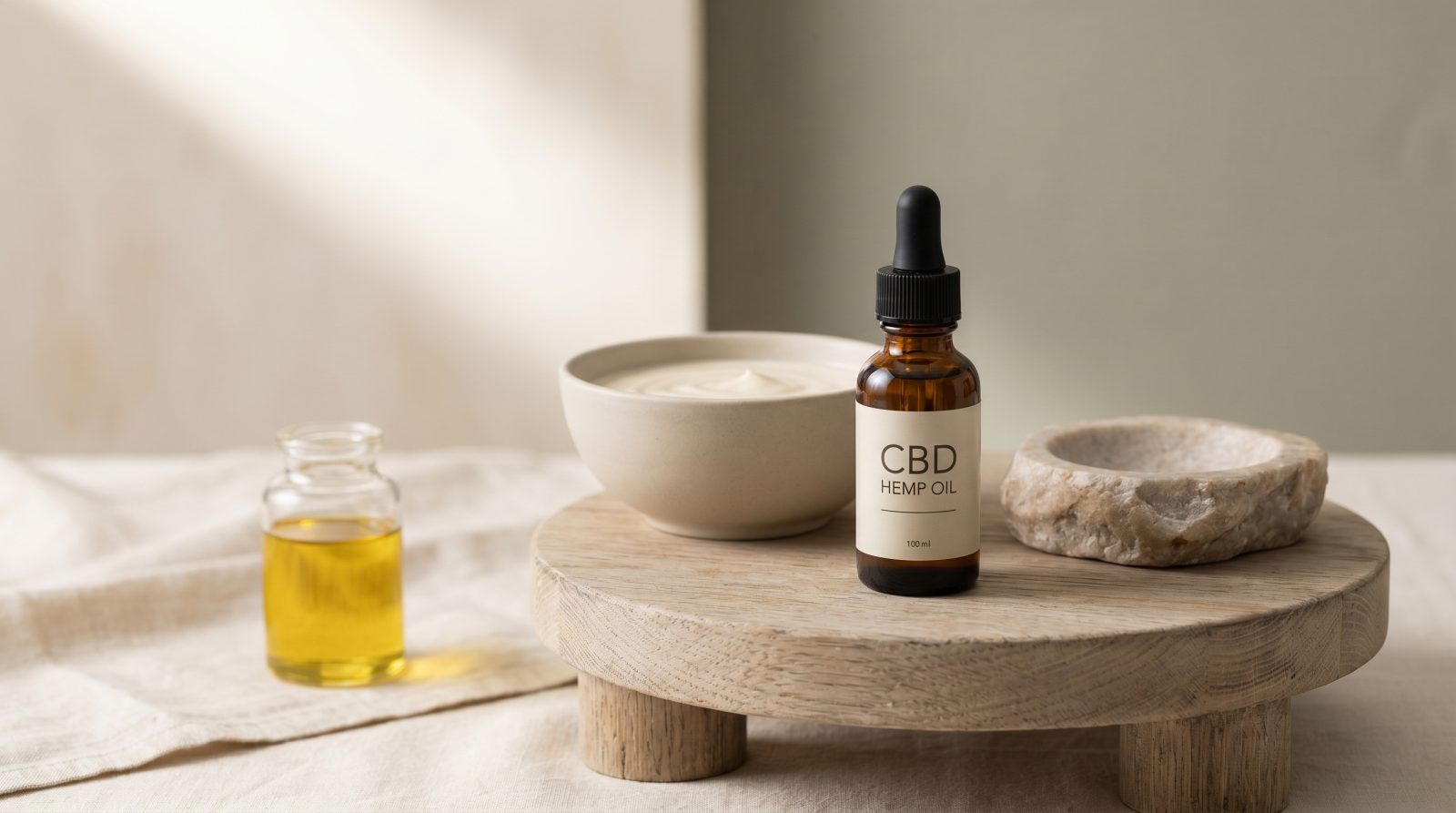
CBD (cannabidiol) is the second most abundant cannabinoid in cannabis after THC. Unlike THC, CBD is not intoxicating and does not produce the characteristic cannabis high. In Canada, CBD products are regulated under the Cannabis Act and sold only through provincially authorized cannabis retailers. CBD is a biologically active compound that interacts with the human endocannabinoid system, the signalling network involved in sleep, mood, appetite, and pain regulation.
What CBD is
Cannabidiol is one of more than 100 cannabinoids found in the Cannabis sativa plant. It is concentrated in the resinous trichomes of the flowering parts (buds and leaves) and is typically extracted using solvents like CO2, ethanol, or hydrocarbons. The extracted CBD is then formulated into oils, tinctures, capsules, edibles, topicals, and other products.
CBD versus THC
| Property | CBD | THC |
|---|---|---|
| Intoxicating | No | Yes |
| Psychoactive | Mildly (calming for some) | Yes (euphoric, altered perception) |
| Receptor binding | Indirect modulation of CB1/CB2 | Direct CB1 binding |
| Drug test detection | Generally negative for THC | Detected; metabolites persist |
| Driving impairment | Not associated | Significant impairment |
| Sleep effects | Variable, some calming | Sedating at higher doses |
| Appetite effects | Variable | Increased ("munchies") |
How CBD is regulated in Canada
The Cannabis Act and its accompanying Cannabis Regulations govern all CBD products in Canada. Key requirements:
- CBD must be produced by Health Canada-licensed producers
- Products must meet specified labelling, packaging, and safety requirements
- Retail sale to consumers occurs only through provincially authorized cannabis retailers (the OCS in Ontario, BC Cannabis Stores in BC, the SQDC in Quebec, AGLC retailers in Alberta, etc.)
- CBD products carry the federal cannabis excise stamp
- Therapeutic claims are restricted; CBD products are not approved health products in Canada except for specific prescription medications (notably Epidiolex/Epidyolex for certain seizure disorders)
This article is informational and does not provide medical advice or guidance on individual CBD use.
How CBD differs from hemp seed oil
This is the most common consumer confusion in the hemp aisle. Hemp seed oil is mechanically pressed from hemp seeds (which contain negligible cannabinoids); it is a food and cosmetic ingredient sold in grocery and natural food stores. CBD oil is extracted from the flowering parts of cannabis (where cannabinoids are concentrated); it is a cannabis product sold only through provincial cannabis retail. The two products differ in source, regulation, price, and effect.
What CBD does (and does not) do
The published evidence for CBD effects is mixed:
- Established medical use: Epidiolex/Epidyolex (a CBD-based prescription drug) is approved for treating certain rare seizure disorders (Dravet syndrome, Lennox-Gastaut syndrome). Evidence here is strong.
- Areas of research with some supportive evidence: anxiety, sleep, chronic pain, inflammation. Evidence is mixed and most studies are small or short-term.
- Areas with weak or no evidence: cancer treatment, "detox", weight loss, hair growth, skin condition cures.
For specific medical conditions, consult a healthcare provider rather than self-medicating with CBD.
The CBD industry in Canada
Since the Cannabis Act took effect in 2018, the Canadian CBD market has matured into a regulated industry of licensed producers, provincial wholesale, and authorized retail. Quality and consistency have improved substantially; products from authorized Canadian retailers are tested for cannabinoid content, contaminants, and microbial safety. The market for unauthorized "CBD" products (sold outside the regulated channel) has shrunk significantly due to consumer awareness and enforcement.